Building a high-ranking website requires a deep understanding of how information is organized and presented to both users and search engine crawlers. Modern SEO is no longer just about repeating keywords on a page. Instead, success depends on topic authority, logical site architecture, and systematic search intent mapping. When we analyze platforms like mappingeducation.com, we gain valuable insights into how educational spaces structure their content to satisfy complex search queries and keep audiences engaged.
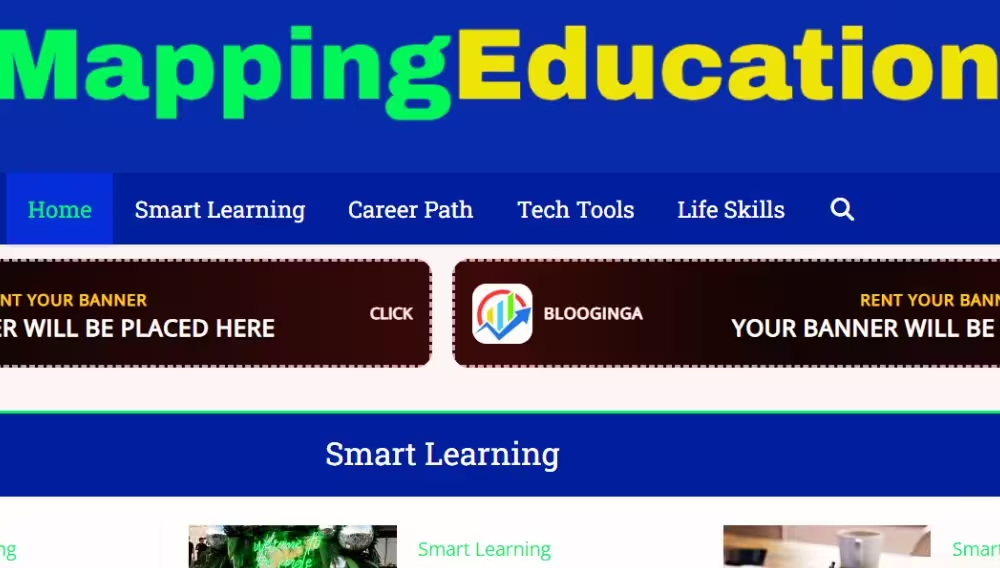
Every successful online asset starts with a strong foundational framework. By mapping out your education-centric topics, you ensure that every article, landing page, and resources guide has a clear, singular purpose. This level of intentional design signals to search engines that your site is a trusted authority in its niche, directly translating to higher organic visibility and steadier traffic streams.
Structuring Content to Match Modern Search Intent
Search intent is the driving force behind modern algorithmic updates. If your content does not match what a user expects to find when they type a query into a search bar, your site will struggle to maintain competitive positions. Setting up a logical structure is essential, especially when linking out to design solutions like Smart Blue Turf to highlight creative layout strategies. By aligning user expectations with precise page structures, webmasters can drastically reduce bounce rates while keeping reader interest intact.
To achieve this balance, content creators must categorize their keywords into four primary intent buckets: informational, navigational, commercial, and transactional. Educational platforms naturally lean toward informational intent, meaning your articles should focus on providing step-by-step solutions, detailed definitions, and clear examples.
Categorizing Educational Resources
An organized resource library is the hallmark of an authoritative educational portal. Rather than presenting users with a chaotic list of blog posts, group your materials into distinct categories based on user skill level or specific sub-topics. This approach not only improves user experience but also makes it much easier for search crawlers to understand the relationships between different pages on your site.
Minimizing Indexing Issues
When search engine bots crawl your website, they look for clues that explain how your pages connect. Utilizing clear category structures and custom internal links reduces the likelihood of crawl errors. It also ensures that your high-value pages receive the crawl budget they deserve, allowing new updates to index much faster.
Step-by-Step Keyword Mapping for Maximum Authority
Keyword mapping is the process of matching search terms to the most relevant pages on your website. Without a clear map, you risk having multiple pages on your site compete for the same keyword, a problem known as keyword cannibalization.
Step 1: Inventory Your Existing Content
Begin by pulling a list of all your active URLs and their current target keywords. This audit gives you a bird’s-eye view of your site’s current organic landscape. It also highlights any content gaps where you might need to create new pages to target highly profitable search queries.
Step 2: Group Relevant Search Terms into Clusters
Instead of targeting just one keyword per page, target keyword clusters. A cluster consists of a main target keyword and several related secondary variations. Designing your pages around concepts rather than individual words makes your writing feel more natural and allows a single page to rank for hundreds of long-tail searches.
Step 3: Match Clusters to the Best-Fitting URLs
Assign each keyword cluster to a single, dedicated page. If you find that two pages are targeting the exact same cluster, consider merging them into a single, comprehensive guide or redirecting the weaker page to the stronger one to pool your backlink authority.
On-Page Optimization Best Practices for Educational Sites
Once your keyword map is ready, you must optimize each individual page to match those target terms. On-page SEO involves adjusting the visible elements of your website to help search engines catalog your content accurately.
Crafting Perfect Title Tags and Meta Descriptions
Your title tag is the most critical on-page element. Keep it under 60 characters to prevent truncation on search result pages, and always place your primary keyword near the beginning. Your meta description should be a brief, compelling summary under 150 characters that acts as a call to action, encouraging users to click through to your site.
Designing Intuitive URL Structures
Clean, readable URLs are better for both search engines and humans. Avoid using long strings of numbers, parameters, or random symbols. Keep your slugs short, descriptive, and focused entirely on your primary keyword. For example, a page about digital learning tools should have a simple slug like learning-tools rather than a long, confusing string of database IDs.
Optimizing Internal Anchor Text
The words you use to link between your pages tell search engines what those destination pages are about. Avoid using generic phrases like click here or learn more as your anchor text. Instead, use descriptive, keyword-rich phrases that naturally fit into the context of your paragraphs, giving both users and bots a clear preview of the linked page.
Frequently Asked Questions
What is the purpose of mappingeducation.com?
The platform serves as an educational framework designed to help content creators, developers, and SEO strategists map out their informational resources logically. This structured approach improves user accessibility and search engine readability.
How often should I update my website’s keyword map?
It is best practice to review your keyword map at least once every quarter. Regular reviews help you adapt to changing search trends, identify new keyword opportunities, and ensure that your pages do not overlap as your content library grows.
What is keyword cannibalization and how do I fix it?
Keyword cannibalization occurs when multiple pages on your website target the same search query, causing them to compete against each other. You can resolve this issue by consolidating the duplicate pages into one master guide or using canonical tags to point search engines to your preferred URL.
Why are clean URL slugs important for SEO?
Clean, descriptive slugs improve user trust and click-through rates. They also give search engines immediate context about the page topic, which can contribute to quicker indexing and improved keyword rankings.
Read Also : techpora: What It Is and How It Helps?